Pune
08048046710
+919112455550

'automatic conductivity monitoring device'

Items tagged with 'automatic conductivity monitoring device'

6814772a5d263414004dd4a4 Card 2

product image
Conductivity

Conductivity of water allows measuring ionic constituents of all types of water including surface water, process water in water supply and treatment plants. PRINCIPLE Conductivity is the ability of a solution, a metal, or a gas - in brief all materials to pass an electric current. In solutions the current is carried by cations and anions whereas in metals it is carried by electrons. How well a solution conducts electricity depends on a number of factors : • Concentration of ions • Mobility of ions • Valence of ions • Temperature All substances possess some degree of conductivity. In aqueous solutions, the level of ionic strength varies from the low conductivity of ultrapure water to the high conductivity of concentrated chemical samples. Conductivity may be measured by applying an alternating electrical current (I) to two Electrodes immersed in a solution and measuring the resulting voltage (U). During this process, the cations migrate to the negative Electrode, the anions to the positive electrode and the solution acts as an electrical conductor.

6814772a5d263414004dd4a4 Card 2

product image
Conductivity

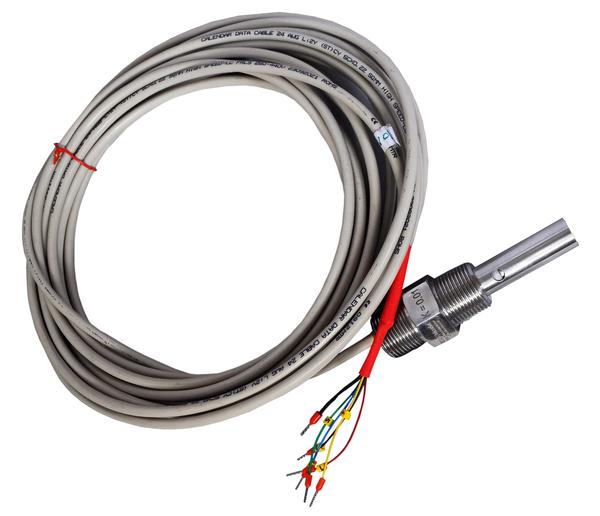
MicroSet’s Conductivity Sensors are designed for fast, easy & trouble free start up. These are ideal for measuring the concentration of dissolved solids in water. They are provided with an accurate predetermined factory calibration constant. Rugged design & corrosion resistant material keep electrode spacing & surface area constant. So cell constant remains stable for long period. Durability of material & high resistance to corrosion ensures the long life & require low maintenance.

6814772a5d263414004dd4a4 Card 2

product image
Conductivity

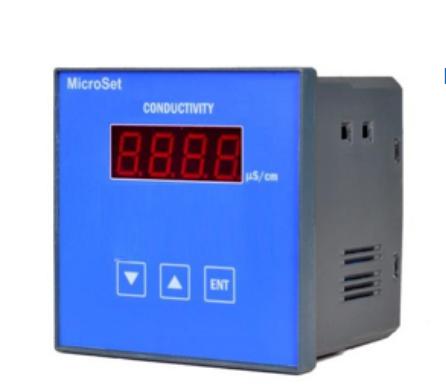
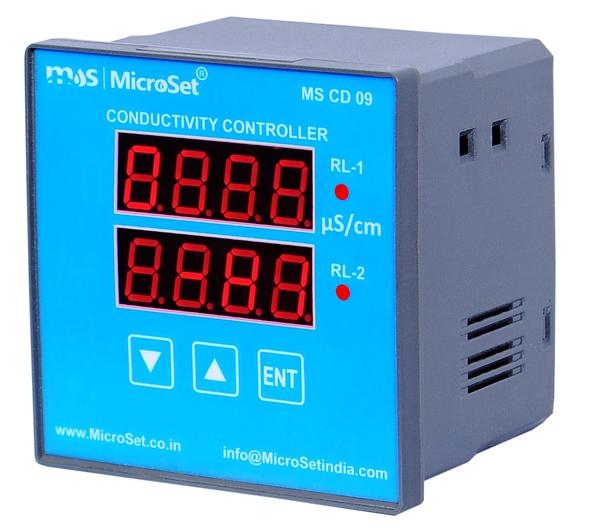
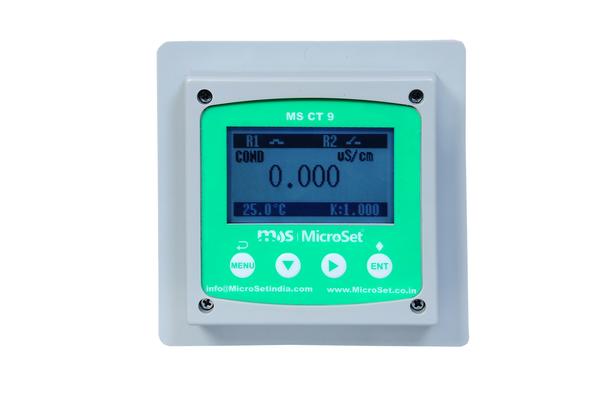
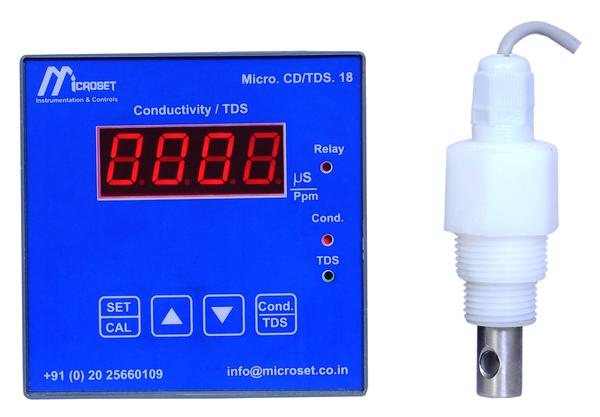
It is an economical meter for online measurement of specific Conductivity of solution using a Conductivity cell for RO plant or DM plant applications. It enables to measure the Conductivity without manual balancing and specific Conductivity is read directly on a digital panel. This is available in panel mounting facility in compact size. PRINCIPLE Conductivity is the ability of a solution, a metal or a gas - in brief all materials to pass an electric current. In solutions the current is carried by cations and anions whereas in metals it is carried by electrons. How well a solution conducts electricity depends on a number of factors: • Concentration of ions • Mobility of ions • Valence of ions • Temperature All substances possess some degree of conductivity. In aqueous solutions the level of ionic strength varies from the low conductivity of ultrapure water to the high conductivity of concentrated chemical samples. Conductivity may be measured by applying an alternating electrical current (I) to two electrodes immersed in a solution and measuring the resulting voltage (U). During this process, the cations migrate to the negative electrode, the anions to the positive electrode and the solution acts as an electrical conductor.

6814772a5d263414004dd4a4 Card 2

product image
Conductivity

It is an economical meter for online measurement of specific Conductivity of solution using a Conductivity cell for R.O plant or D.M plant applications. It enables to measure the Conductivity without manual balancing and specific Conductivity is read directly on a digital panel. This is available in panel mounting facility in compact size.

6814772a5d263414004dd4a4 Card 2

product image
TDS

Conductivity of water allows measuring ionic constituents of all types of water including surface water, process water in water supply and treatment plants. PRINCIPLE Conductivity is the ability of a solution, a metal, or a gas - in brief all materials to pass an electric current. In solutions the current is carried by cations and anions whereas in metals it is carried by electrons. How well a solution conducts electricity depends on a number of factors : • Concentration of ions • Mobility of ions • Valence of ions • Temperature All substances possess some degree of conductivity. In aqueous solutions, the level of ionic strength varies from the low conductivity of ultrapure water to the high conductivity of concentrated chemical samples. Conductivity may be measured by applying an alternating electrical current (I) to two Electrodes immersed in a solution and measuring the resulting voltage (U). During this process, the cations migrate to the negative Electrode, the anions to the positive electrode and the solution acts as an electrical conductor.

6814772a5d263414004dd4a4 Card 2

product image
TDS

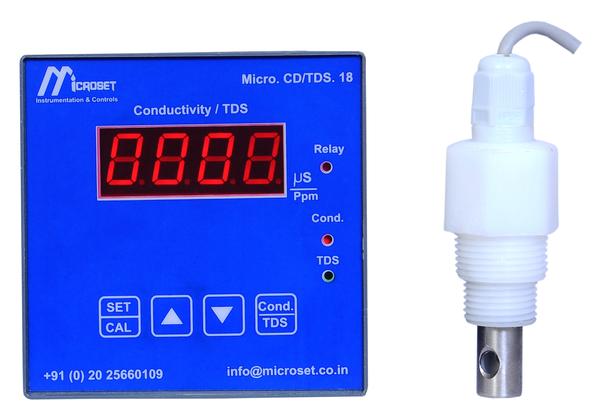
Conductivity of water allows measuring ionic constituents of all types of water including surface waters, process waters in water supply and treatment plants. PRINCIPLE Conductivity is the ability of a solution, a metal or a gas - in brief all materials to pass an electric current. In solutions the current is carried by cations and anions whereas in metals it is carried by electrons. How well a solution conducts electricity depends on a number of factors • Concentration of ions • Mobility of ions • Valence of ions • Temperature All substances possess some degree of conductivity. In aqueous solutions the level of ionic strength varies from the low conductivity of ultrapure water to the high conductivity of concentrated chemical samples. Conductivity may be measured by applying an alternating electrical current (I) to two electrodes immersed in a solution and measuring the resulting voltage (U). During this process, the cations migrate to the negative Electrode, the anions to the positive electrode and the solution acts as an electrical conductor.

6814772a5d263414004dd4a4 Card 2

product image
Dissolved Chlorine

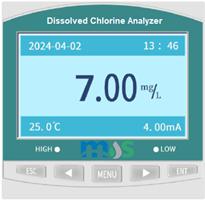
Online Residual Dissolved Chlorine controller is widely used for the continuous monitoring and controlling of residual chlorine value in water solution, such as the automatic control of recirculating water, chlorination control in swimming pool, distribution network of drinking water, swimming pool, hospital wastewater and water treatment engineering.

6814772a5d263414004dd4a4 Card 2

product image
COD BOD

MicroSet launched the new generation COD BOD TSS TOC Sensor which is used for environmental protection purpose. Sensor is reagent free, pollution-free, more economic & robust. Due to small size, it is easier for installation for online continuous water quality monitoring. Sensor comes with Automatic compensation for turbidity interference, with automatic cleaning facility. For long-term monitoring it has excellent stability. Thanks to our R&D team for developing robust, trouble-free controller for processing the signals coming from the sensor. The Controller gives output of RS 485 MODBUS for real time data monitoring demands of SPCB & CPCB.

6814772a5d263414004dd4a4 Card 2

product image
pH

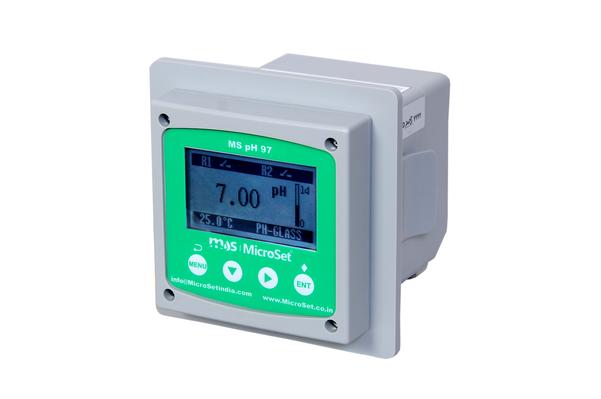
• Advanced Embedded Microcontroller Based Design • Can be connected to pH or ORP electrodes • Multivariable Display for Process Value, Relay Status, Temperature & 4 to 20 mA output • Easy Front Key Calibration • Auto / Manual Temperature Compensation • Set Point – 4 Nos • 3.2-inch LCD display • 4 to 20 mA DC Isolated Output for pH or ORP • Password can be Set • Weatherproof IP 66 Protection DESCRIPTION MicroSet pH ORP Indicating Controller Transmitter Model MS pH 97 is used for various industrial applications. MS pH 97 is a convenient and cost-effective solution for monitoring and maintaining pH or ORP value. It can accept input from any pH or ORP sensor. MS pH 97 output is in the form of Analogue 4-20 mA DC or MODBUS RS 485 RTU (Optional). Online pH ORP indication provided through LCD display is easily readable. 2 Nos Relay Outputs are provided to operate Alarm, Solenoid Valve, Pump etc. 4 Nos Setpoints for Relays can be programmed using Frontal Keypad

Still searching for
automatic conductivity monitoring device?