Bengaluru
08048046829
+919112455550

'digital conductivity panel mount'

Items tagged with 'digital conductivity panel mount'

6814772a5d263414004dd4a4 Card 2

product image
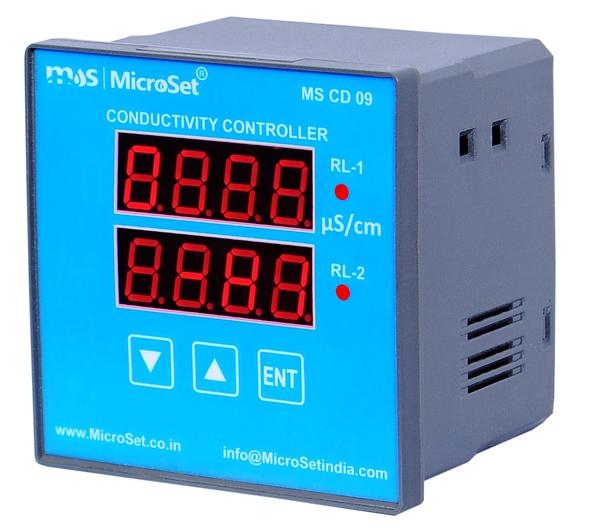
Conductivity

It is an economical meter for online measurement of specific Conductivity of solution using a Conductivity cell for RO plant or DM plant applications. It enables to measure the Conductivity without manual balancing and specific Conductivity is read directly on a digital panel. This is available in panel mounting facility in compact size. PRINCIPLE Conductivity is the ability of a solution, a metal or a gas - in brief all materials to pass an electric current. In solutions the current is carried by cations and anions whereas in metals it is carried by electrons. How well a solution conducts electricity depends on a number of factors: • Concentration of ions • Mobility of ions • Valence of ions • Temperature All substances possess some degree of conductivity. In aqueous solutions the level of ionic strength varies from the low conductivity of ultrapure water to the high conductivity of concentrated chemical samples. Conductivity may be measured by applying an alternating electrical current (I) to two electrodes immersed in a solution and measuring the resulting voltage (U). During this process, the cations migrate to the negative electrode, the anions to the positive electrode and the solution acts as an electrical conductor.

6814772a5d263414004dd4a4 Card 2

product image
Conductivity

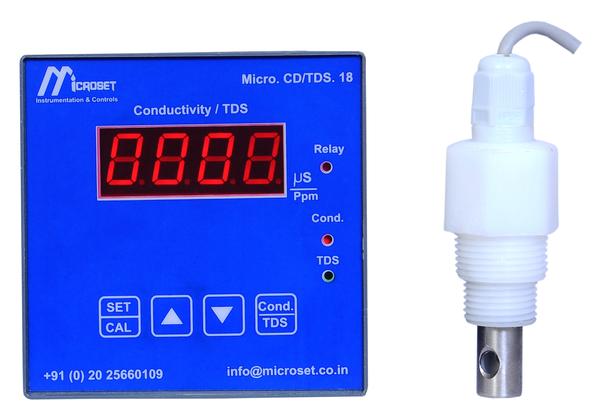
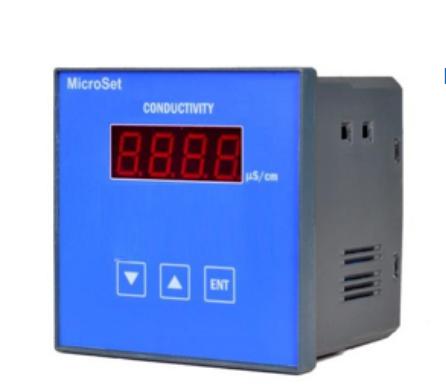
It is an economical meter for online measurement of specific Conductivity of solution using a Conductivity cell for R.O plant or D.M plant applications. It enables to measure the Conductivity without manual balancing and specific Conductivity is read directly on a digital panel. This is available in panel mounting facility in compact size.

6814772a5d263414004dd4a4 Card 2

product image
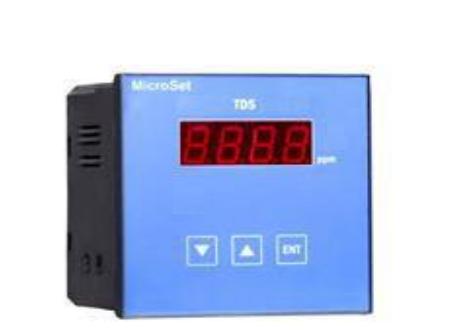
TDS

Total Dissolved solids, smaller than 2 microns, refer to any minerals, salts, metals, in the form of molecules, atoms, cations or anions dissolved in water. Total dissolved solids (TDS) comprise inorganic salts (principally calcium, magnesium, potassium, sodium, bicarbonates, chlorides and sulfates) and some small amounts of organic matter that dissolve in water. The TDS concentration is the sum of all filterable substances in water that can be determined gravimetrically. However, in most cases, TDS is primarily comprised of ions. TDS is mainly used in the studies of water quality in the natural bodies of water, including surface and ground sources. It is an Microprocessor based online measurement of specific TDS of solution using a TDS cell for R.O plant or D.M plant applications. It enables to measure the TDS without manual balancing and specific TDS is read directly on a digital panel. This is available in panel mounting facility in compact size. Why Measure Total Dissolved Solids? TDS in drinking water can originate from natural sources, urban run-off, municipal and industrial waste, chemicals used in treating water and the actual plumbing infrastructure. While TDS is not considered a primary pollutant, it is an indicator of water quality. The USEPA secondary water quality standard for TDS concentration is 500 mg/L to ensure drinking water palatability. High levels of dissolved solids in drinking water can affect the taste causing it to be bitter or salty. High levels of TDS can also lead to scaling and corrosion in any application but especially in boilers and cooling water.

6814772a5d263414004dd4a4 Card 2

product image
pH

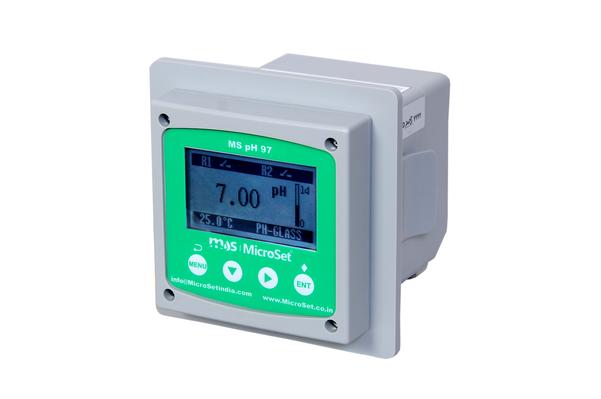
• Advanced Embedded Microcontroller Based Design • Can be connected to pH or ORP electrodes • Multivariable Display for Process Value, Relay Status, Temperature & 4 to 20 mA output • Easy Front Key Calibration • Auto / Manual Temperature Compensation • Set Point – 4 Nos • 3.2-inch LCD display • 4 to 20 mA DC Isolated Output for pH or ORP • Password can be Set • Weatherproof IP 66 Protection DESCRIPTION MicroSet pH ORP Indicating Controller Transmitter Model MS pH 97 is used for various industrial applications. MS pH 97 is a convenient and cost-effective solution for monitoring and maintaining pH or ORP value. It can accept input from any pH or ORP sensor. MS pH 97 output is in the form of Analogue 4-20 mA DC or MODBUS RS 485 RTU (Optional). Online pH ORP indication provided through LCD display is easily readable. 2 Nos Relay Outputs are provided to operate Alarm, Solenoid Valve, Pump etc. 4 Nos Setpoints for Relays can be programmed using Frontal Keypad

6814772a5d263414004dd4a4 Card 2

product image
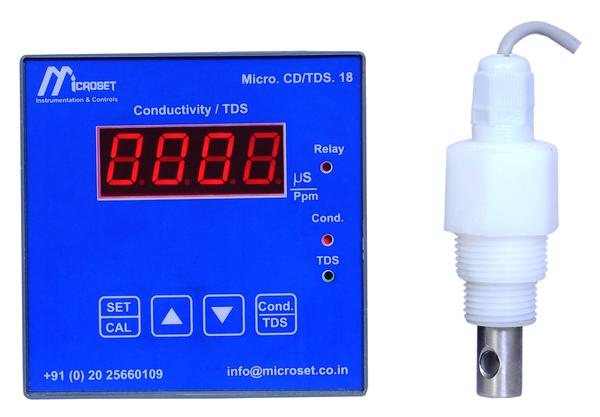
Conductivity

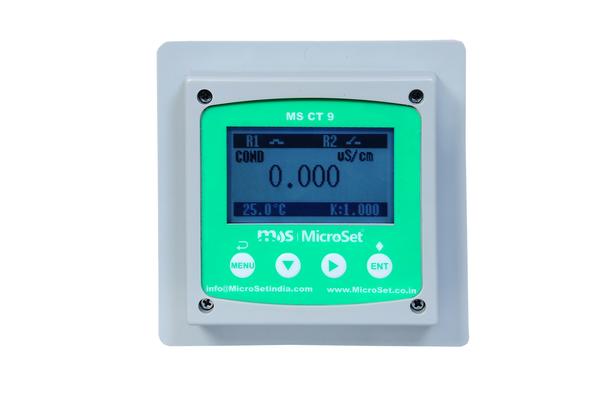
Conductivity of water allows measuring ionic constituents of all types of water including surface water, process water in water supply and treatment plants. PRINCIPLE Conductivity is the ability of a solution, a metal, or a gas - in brief all materials to pass an electric current. In solutions the current is carried by cations and anions whereas in metals it is carried by electrons. How well a solution conducts electricity depends on a number of factors : • Concentration of ions • Mobility of ions • Valence of ions • Temperature All substances possess some degree of conductivity. In aqueous solutions, the level of ionic strength varies from the low conductivity of ultrapure water to the high conductivity of concentrated chemical samples. Conductivity may be measured by applying an alternating electrical current (I) to two Electrodes immersed in a solution and measuring the resulting voltage (U). During this process, the cations migrate to the negative Electrode, the anions to the positive electrode and the solution acts as an electrical conductor.

6814772a5d263414004dd4a4 Card 2

product image
Conductivity

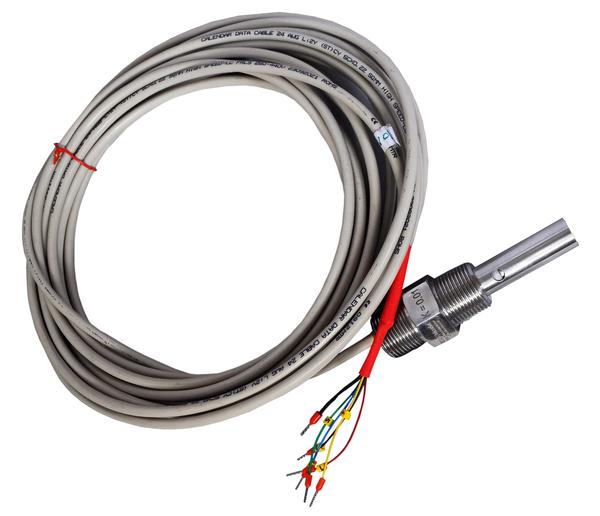
MicroSet’s Conductivity Sensors are designed for fast, easy & trouble free start up. These are ideal for measuring the concentration of dissolved solids in water. They are provided with an accurate predetermined factory calibration constant. Rugged design & corrosion resistant material keep electrode spacing & surface area constant. So cell constant remains stable for long period. Durability of material & high resistance to corrosion ensures the long life & require low maintenance.

6814772a5d263414004dd4a4 Card 2

product image
TDS

Conductivity of water allows measuring ionic constituents of all types of water including surface water, process water in water supply and treatment plants. PRINCIPLE Conductivity is the ability of a solution, a metal, or a gas - in brief all materials to pass an electric current. In solutions the current is carried by cations and anions whereas in metals it is carried by electrons. How well a solution conducts electricity depends on a number of factors : • Concentration of ions • Mobility of ions • Valence of ions • Temperature All substances possess some degree of conductivity. In aqueous solutions, the level of ionic strength varies from the low conductivity of ultrapure water to the high conductivity of concentrated chemical samples. Conductivity may be measured by applying an alternating electrical current (I) to two Electrodes immersed in a solution and measuring the resulting voltage (U). During this process, the cations migrate to the negative Electrode, the anions to the positive electrode and the solution acts as an electrical conductor.

6814772a5d263414004dd4a4 Card 2

product image
TDS

Conductivity of water allows measuring ionic constituents of all types of water including surface waters, process waters in water supply and treatment plants. PRINCIPLE Conductivity is the ability of a solution, a metal or a gas - in brief all materials to pass an electric current. In solutions the current is carried by cations and anions whereas in metals it is carried by electrons. How well a solution conducts electricity depends on a number of factors • Concentration of ions • Mobility of ions • Valence of ions • Temperature All substances possess some degree of conductivity. In aqueous solutions the level of ionic strength varies from the low conductivity of ultrapure water to the high conductivity of concentrated chemical samples. Conductivity may be measured by applying an alternating electrical current (I) to two electrodes immersed in a solution and measuring the resulting voltage (U). During this process, the cations migrate to the negative Electrode, the anions to the positive electrode and the solution acts as an electrical conductor.

6814772a5d263414004dd4a4 Card 2

product image
pH

FEATURE • Four Ceramic Junction → Fast Response due to increased porosity,Increased Sensor Life • Filled with Gel → Helps to maintain zero potential for longer time • Industrial Grade Rugged Construction • Easy Installation DESCRIPTION MicroSet make pH Sensor model MS pH 02 is designed for various Industrial Applications. Four ceramic junction reference aids in the sensor's resistance to harsh environments and helps prolong sensor life. The robust sensor design makes the MS pH 02 reliable in a wide range of aqueous solutions found in pipelines, open tanks or ponds. TECHNICAL SPECIFICATION Range : 0 to14 pH Body : Derlin Type : Combination Sensor Output : mV (± 59.4 mV/pH change at 25°C) Pressure : 6 Bar Temperature : 0 ~ 100°C Temperature Compensation : Pt 100 (Optional) Junction : Four Ceramic Process Connection : ¾” BSP Male on Front End and Rear End Mounting : Pipeline (Inline) or Immersion (Tank) or Flow Through Chamber Cable : Standard Integral Cable 5 Meter with BNC (Optional Leads) Cable Length: 10, 15, 20, 25 Meters Also Available (Optional At ExtraCost) Please specify Cable Length required while ordering Note: Integral Cable Cannot Be Extended from 5 Mtrs. to 10 Mtrs. or so

Still searching for
digital conductivity panel mount?